Cooking App with React + Api
Flan
Origin : Uruguayan
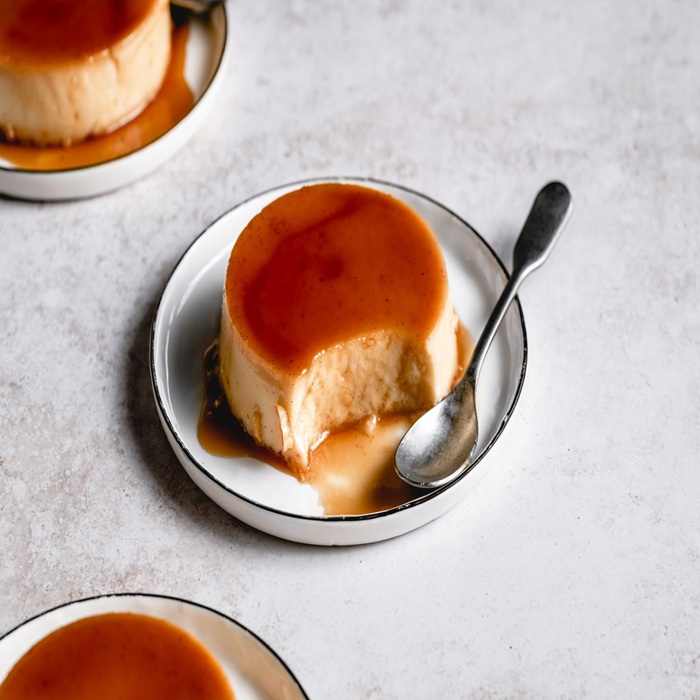
For the caramel place 100 grams of sugar in a frying pan without any fat and melt on medium heat. Try not to stir with a spoon, but swirl the pan itself. Let melt until you have an amber color and sugar is fully melted. Fill the bottom of four flan containers with it. Caramel will harden immediately, so you need to be fast. My containers yield about 120 milliliters each. 2 Preheat oven to 150 degrees Celsius and look for a casserole or container all your four flan containers fit into. 3 Heat milk with 45 grams of sugar and the cut and scraped out vanilla pod. The milk does not need to boil, just needs to be heated. Take out vanilla pod after a few minutes. Meanwhile stir the egg yolks and eggs gently, try not to incorporate any air in it. Them pour milk-mix into egg-mix and again only stir very gently. Pour into prepared flan containers and place these into your casserole or container. Boil water and pour the water into the large casserole. Be sure not to touch the flan mixture. Place on middle rack in the oven and let bake for about 35-40 minutes. An inserted toothpick should come out clean. 4 Let cool inside the container for an hour before transferring to the fridge. Chill overnight. The next day gently release the rim and then turn upside down on a plate. Serve with some dulce de leche on the side.
Ezme
Origin : Turkish
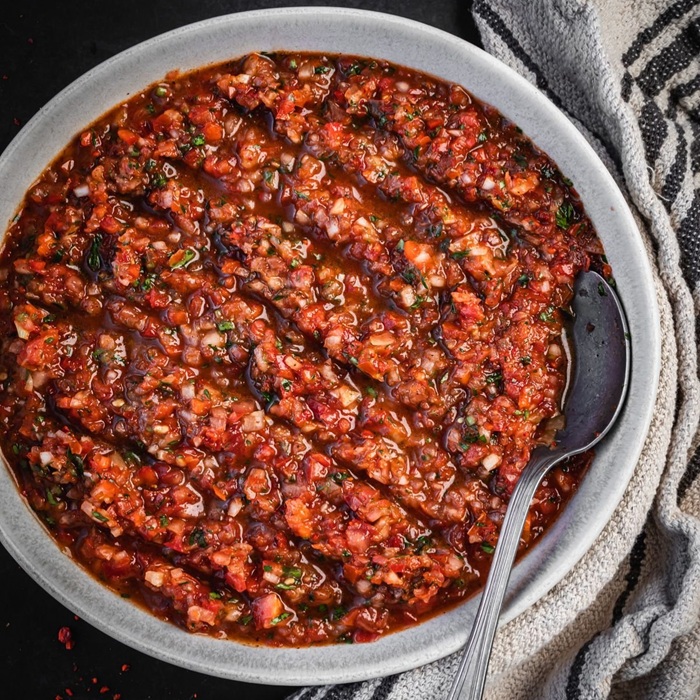
step 1 Put the tomatoes and all of the peppers in a food processor and blitz until finely chopped. Tip out into a sieve, set over a bowl and leave to strain. Add the onions, garlic and parsley to the food processor and blitz until finely chopped, then set aside. step 2 Add red pepper paste, tomato purée, pomegranate molasses, pul biber, sumac, dried mint and most of the extra virgin olive oil to a serving bowl and whisk well so everything comes together as a sauce. Tip in the blitzed onion mixture and the strained pepper mixture along with 1 tsp flaky sea salt . Stir well, then drizzle with the remaining extra virgin olive oil to serve.
kabse
Origin : Saudi Arabian
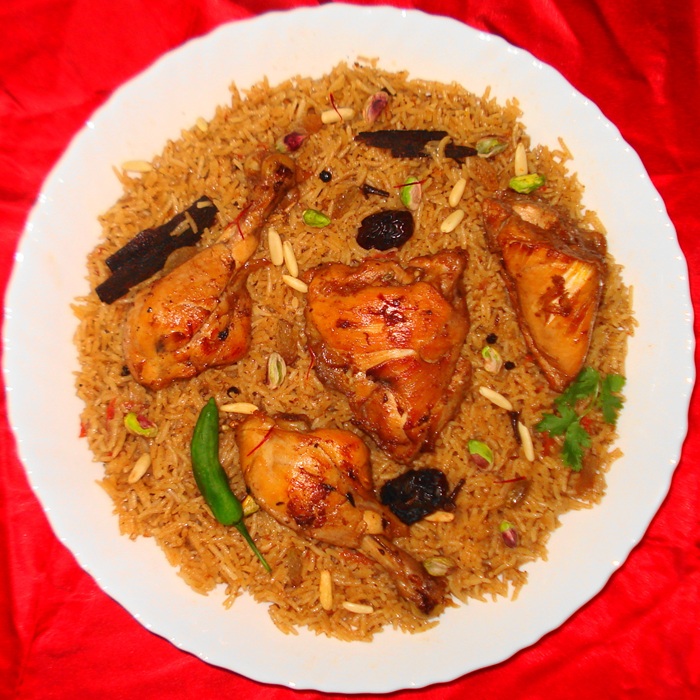
1 Caramelize the chicken with olive oil then add a maggi cube and boil it for around 30 minutes. 2 In another pot, add all the veggies and caramelize them till they are soft. 3 Once everything is done, add the rice, raisins & spices to the veggies and add 2 and a half cups of water for the rice to cook. 4 Once the rice is done put everything in the oven.
Asado
Origin : Argentinian
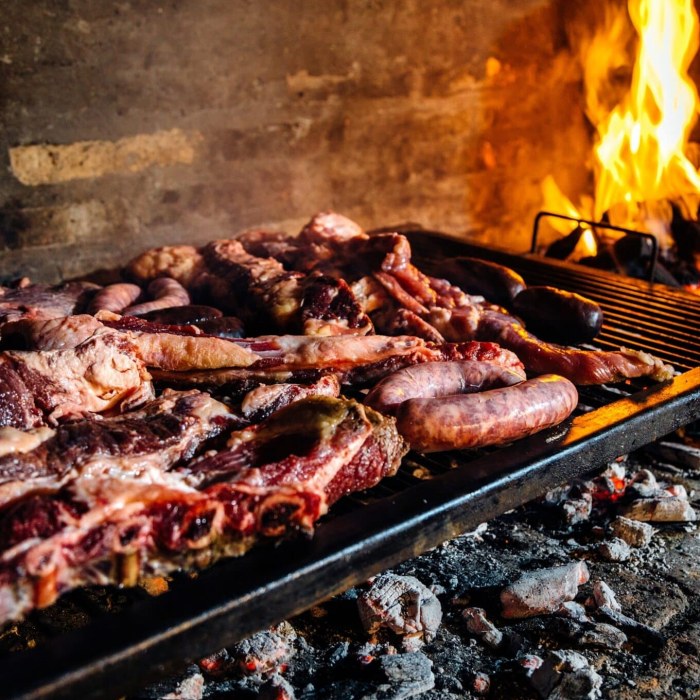
Prepare the Fire: Start a wood fire in your grill and let it burn down to coals. Season the Meat: Generously salt the beef cuts. Grill the Meat: Place the beef on the grill, starting with the thickest cuts farthest from the coals. Add chorizo and morcilla after the beef has been cooking for a while. Cook to Perfection: Cook the meat, turning occasionally, until it reaches your desired doneness. Typically, ribs may take up to 2 hours; thinner cuts will cook faster. Rest and Serve: Let the meat rest for about 10 minutes before slicing. Serve with chimichurri sauce and grilled vegetables. Pro Tips: Use a mix of wood and charcoal for a consistent heat source. Wood adds flavor, while charcoal maintains temperature. Season the meat just before grilling to ensure it retains its moisture and flavor. Serving Suggestions: Serve with a side of chimichurri sauce, a fresh tomato salad, and crusty bread. Pair with a robust Malbec wine to complement the rich flavors of the meat.
Migas
Origin : Spanish
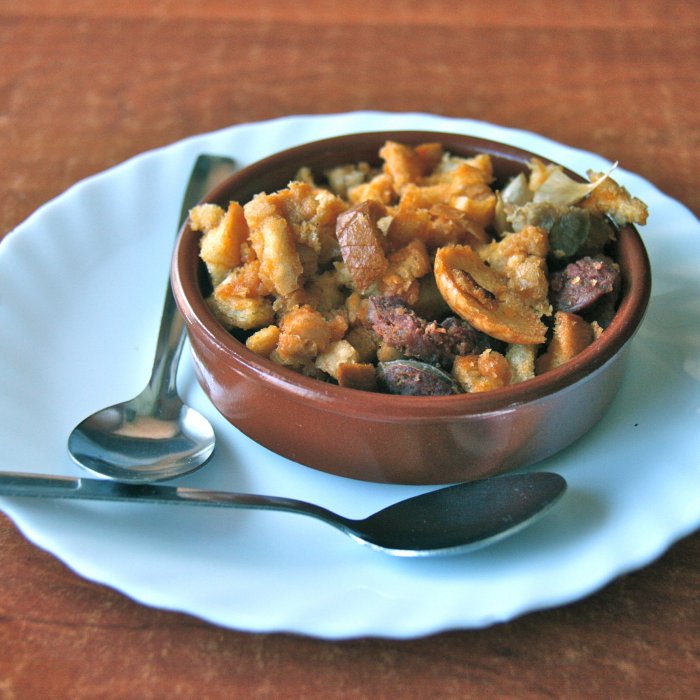
Crumble the bread into small pieces. Sprinkle with cold water, cover with a damp cloth and leave for 30 minutes. Heat 2 tsp of olive oil in a deep pan. Add the garlic cloves separated, skins on; just make a small cut with a knife to open them and keep frying for 5 minutes. Set the garlic aside. In the same oil, where we fried everything, simmer the bread, stirring constantly for 15 minutes and add a grinding of black pepper. Add the garlic, continue stirring for about 20 minutes. It will be ready when the bread is soft and golden.
Sushi
Origin : Japanese
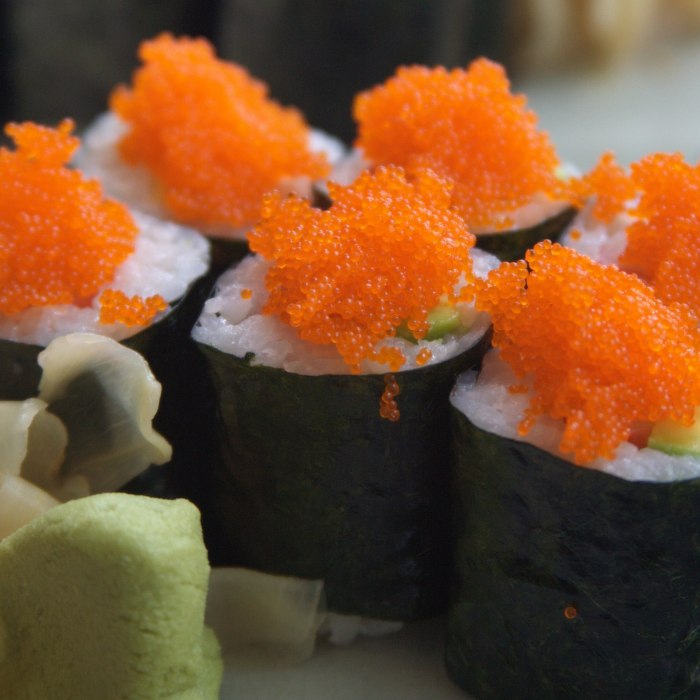
STEP 1 TO MAKE SUSHI ROLLS: Pat out some rice. Lay a nori sheet on the mat, shiny-side down. Dip your hands in the vinegared water, then pat handfuls of rice on top in a 1cm thick layer, leaving the furthest edge from you clear. STEP 2 Spread over some Japanese mayonnaise. Use a spoon to spread out a thin layer of mayonnaise down the middle of the rice. STEP 3 Add the filling. Get your child to top the mayonnaise with a line of their favourite fillings – here we’ve used tuna and cucumber. STEP 4 Roll it up. Lift the edge of the mat over the rice, applying a little pressure to keep everything in a tight roll. STEP 5 Stick down the sides like a stamp. When you get to the edge without any rice, brush with a little water and continue to roll into a tight roll. STEP 6 Wrap in cling film. Remove the mat and roll tightly in cling film before a grown-up cuts the sushi into thick slices, then unravel the cling film. STEP 7 TO MAKE PRESSED SUSHI: Layer over some smoked salmon. Line a loaf tin with cling film, then place a thin layer of smoked salmon inside on top of the cling film. STEP 8 Cover with rice and press down. Press about 3cm of rice over the fish, fold the cling film over and press down as much as you can, using another tin if you have one. STEP 9 Tip it out like a sandcastle. Turn block of sushi onto a chopping board. Get a grown-up to cut into fingers, then remove the cling film. STEP 10 TO MAKE SUSHI BALLS: Choose your topping. Get a small square of cling film and place a topping, like half a prawn or a small piece of smoked salmon, on it. Use damp hands to roll walnut-sized balls of rice and place on the topping. STEP 11 Make into tight balls. Bring the corners of the cling film together and tighten into balls by twisting it up, then unwrap and serve.
Cacik
Origin : Turkish
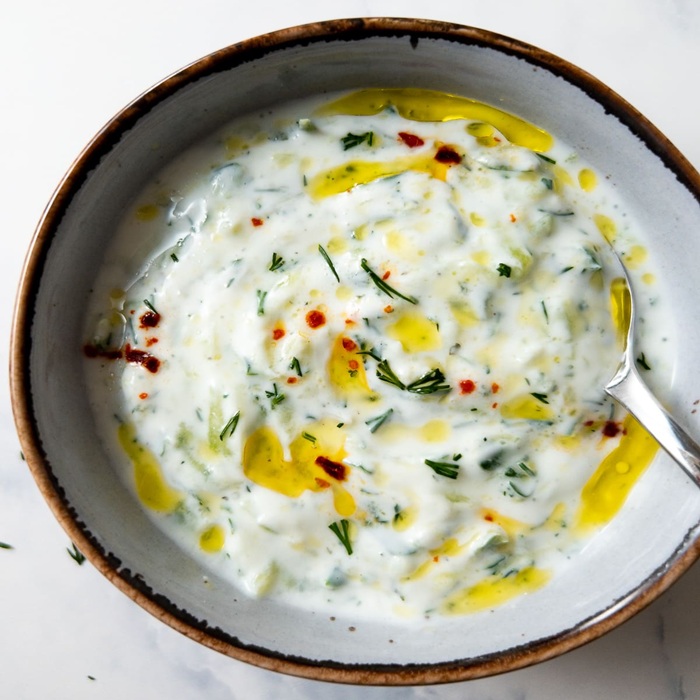
step 1 Put a sieve over a large bowl, line it with a thick sheet of non-dyed kitchen paper or a clean muslin cloth, and spoon in the yogurt. Cover with another sheet of kitchen paper and leave to strain in the fridge for a minimum of 12 hrs. step 2 Add the lemon juice, most of the olive oil and the dried mint to a bowl and stir well for the dried mint to soften and soak up the juices. Mix in the strained yogurt, then pour away the strained yogurt liquid and leave that bowl to one side. step 3 Halve the cucumber(s) lengthways and remove the seeds by running a teaspoon from the top to the bottom of the flesh, halve the cucumbers widthways to make them shorter and easier to handle, then coarsely grate each one into the bowl the yogurt was straining over. Using clean hands (or a clean muslin cloth), squeeze as much of the liquid out of the cucumber as possible. step 4 Add the strained, grated cucumber, garlic and ¾ tsp flaky salt to the rest of the ingredients and mix well. Garnish with a drizzle of extra virgin olive oil and a sprinkling of dried mint.
Locro
Origin : Argentinian
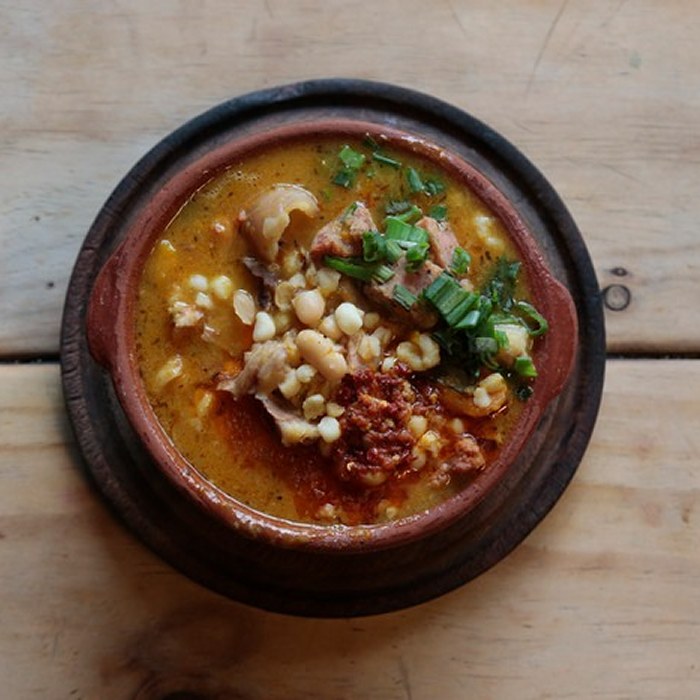
Soak: Soak corn and beans overnight in water. Cook Meats: In a large pot, brown the beef and pork. Add onions and spices, cooking until translucent. Simmer the Stew: Add soaked corn and beans, pumpkin, potato, and enough water to cover. Simmer for 2-3 hours, until thick. Serve: Enjoy hot, with bread on the side. Pro Tips: Toasting the corn slightly before adding it to the stew enhances its flavor. Add a spoonful of paprika or a dash of cumin for an extra layer of warmth and complexity
Burek
Origin : Croatian
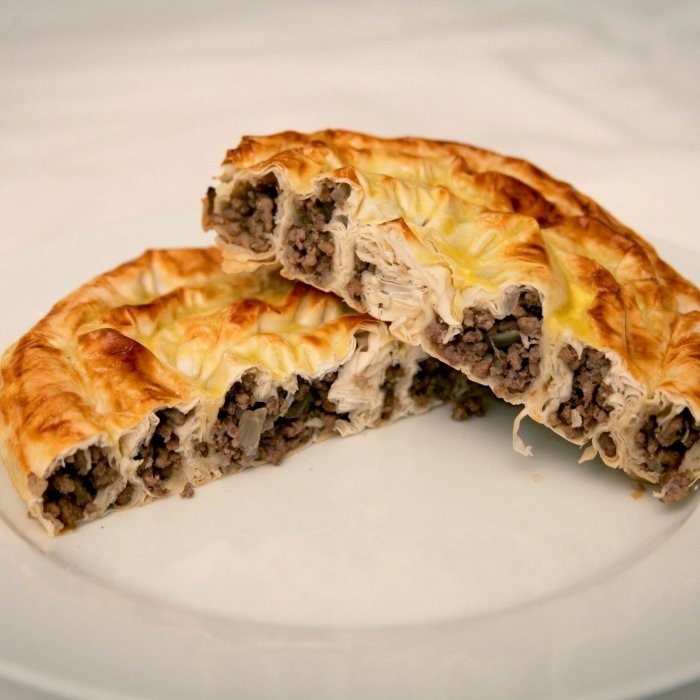
Fry the finely chopped onions and minced meat in oil. Add the salt and pepper. Grease a round baking tray and put a layer of pastry in it. Cover with a thin layer of filling and cover this with another layer of filo pastry which must be well coated in oil. Put another layer of filling and cover with pastry. When you have five or six layers, cover with filo pastry, bake at 200ºC/392ºF for half an hour and cut in quarters and serve.
Corba
Origin : Turkish

Pick through your lentils for any foreign debris, rinse them 2 or 3 times, drain, and set aside. Fair warning, this will probably turn your lentils into a solid block that you’ll have to break up later In a large pot over medium-high heat, sauté the olive oil and the onion with a pinch of salt for about 3 minutes, then add the carrots and cook for another 3 minutes. Add the tomato paste and stir it around for around 1 minute. Now add the cumin, paprika, mint, thyme, black pepper, and red pepper as quickly as you can and stir for 10 seconds to bloom the spices. Congratulate yourself on how amazing your house now smells. Immediately add the lentils, water, broth, and salt. Bring the soup to a (gentle) boil. After it has come to a boil, reduce heat to medium-low, cover the pot halfway, and cook for 15-20 minutes or until the lentils have fallen apart and the carrots are completely cooked. After the soup has cooked and the lentils are tender, blend the soup either in a blender or simply use a hand blender to reach the consistency you desire. Taste for seasoning and add more salt if necessary. Serve with crushed-up crackers, torn up bread, or something else to add some extra thickness. You could also use a traditional thickener (like cornstarch or flour), but I prefer to add crackers for some texture and saltiness. Makes great leftovers, stays good in the fridge for about a week.
Borsch
Origin : Ukrainian

step 1 To make the stock, put the meat, whole onion, bay leaf and 2 litres of lightly salted cold water in a large saucepan. Cook over a very low heat for 1 hr 30 mins or until the beef shin is soft and falls apart easily – this can take up to 3 hrs. Skim off the scum with a spoon from time to time. Break up any larger pieces of beef into the broth, remove the whole onion and discard. step 2 Add the potatoes to the borscht, season well with salt and pepper and cook for 10-15 mins until tender. Meanwhile, heat the sunflower oil in a large, deep frying pan. Add the diced onion and carrot, and cook over a medium heat, stirring, until the carrot is soft and is about to start caramelising. step 3 Add the beetroot and cook for around 5 mins, stirring occasionally. Add the red pepper, if using, and cook for another 2 mins, then add the tomatoes and prunes, stir, then increase the heat and boil to reduce slightly, before adding everything to the borscht. step 4 Add the shredded cabbage and the kidney beans, and cook for 7-10 mins or until tender. Serve with a dollop of sour cream or crème fraîche, lots of chopped dill and some crusty bread.
Hummus
Origin : Turkish
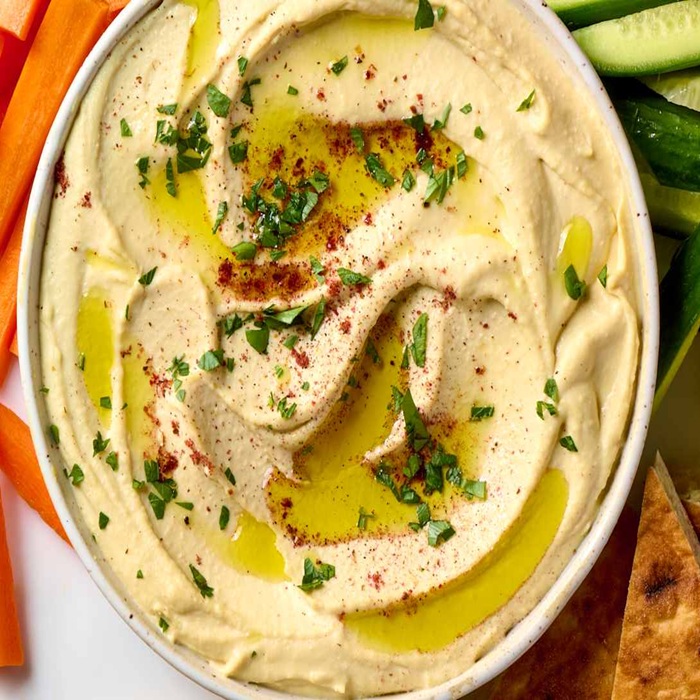
step 1 Drain the chickpeas into a sieve set over a bowl or jug to catch the liquid. Tip the chickpeas, tahini, garlic and yogurt into a food processor or blender and whizz to smooth. step 2 Whizz in a tbsp of the chickpea liquid at a time until you have a nice consistency, then scrape into a bowl. step 3 Stir in a squeeze of lemon juice and season to taste.
Kumpir
Origin : Turkish
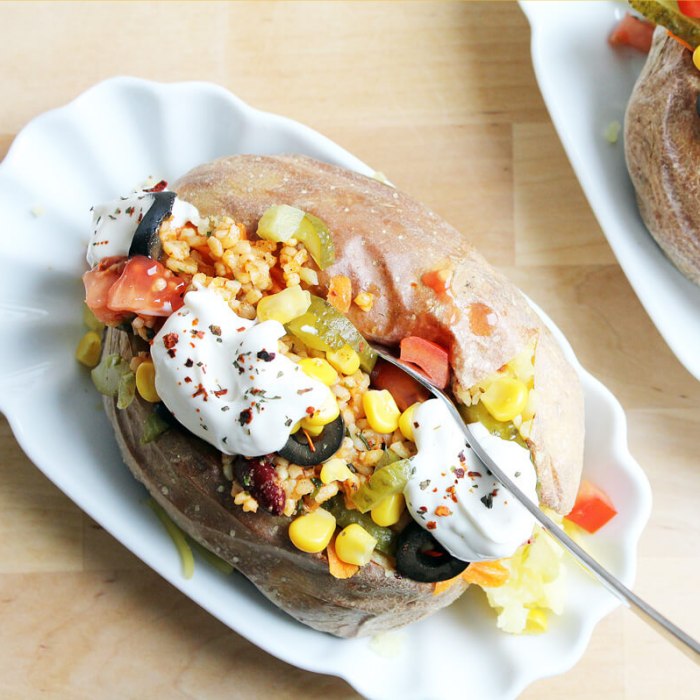
If you order kumpir in Turkey, the standard filling is first, lots of butter mashed into the potato, followed by cheese. There’s then a row of other toppings that you can just point at to your heart’s content – sweetcorn, olives, salami, coleslaw, Russian salad, allsorts – and you walk away with an over-stuffed potato because you got ever-excited by the choices on offer. Grate (roughly – you can use as much as you like) 150g of cheese. Finely chop one onion and one sweet red pepper. Put these ingredients into a large bowl with a good sprinkling of salt and pepper, chilli flakes (optional).
Knafeh
Origin : Saudi Arabian
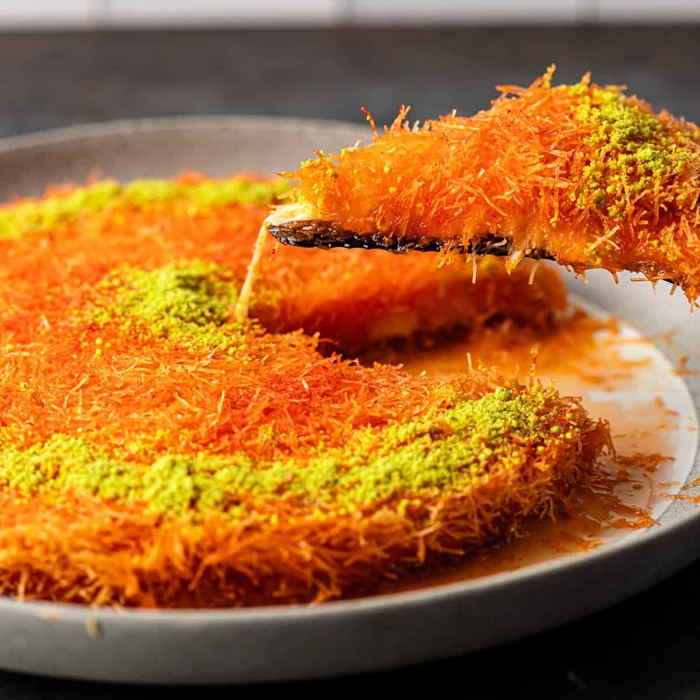
1 Take kanfhe in a bowl and roughly cut them. Pour melted butter, yellow food color and mix well with your hands. In a separate bowl mix milk, cream cheese, sugar, cornstarch well. 2 Turn on the flame and boil the liquid, when it gets thick turn off the flame let it cool down a little bit. Add mozzarella in it and mix it well. Now make a base with half of the kanfhe in a dish, gently press it to level the dough well. Pour the cheese mixture on the top and level it with a spoon. 3 Cover it with the other half of the kanfhe. Put the dish in a preheated oven at 200 degree for about 20-25 minutes. It's ready when kunafa is golden and crunchy in the surface. 4 Boil water in a pan and dissolve sugar in it for 4–5 minutes. OR cook it until slightly thicken and keep on stirring. Add lemon juice with rose water, mix well. Evenly pour the syrup over the kunafa as soon as it comes out of the oven. Your kunafa is ready to serve.
Tamiya
Origin : Egyptian
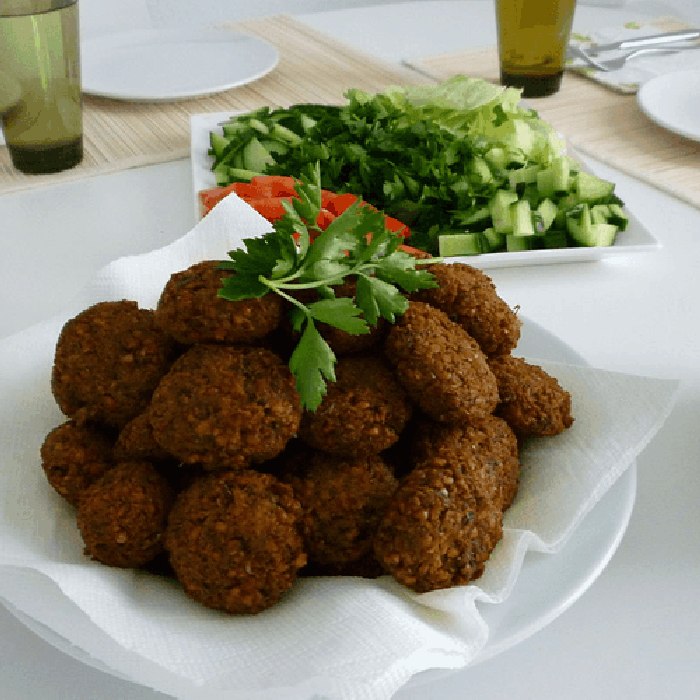
oak the beans in water to cover overnight.Drain. If skinless beans are unavailable, rub to loosen the skins, then discard the skins. Pat the beans dry with a towel. Grind the beans in a food mill or meat grinder.If neither appliance is available, process them in a food processor but only until the beans form a paste. (If blended too smoothly, the batter tends to fall apart during cooking.) Add the scallions, garlic, cilantro, cumin, baking powder, cayenne, salt, pepper, and coriander, if using. Refrigerate for at least 30 minutes. Shape the bean mixture into 1-inch balls.Flatten slightly and coat with flour. Heat at least 1½-inches of oil over medium heat to 365 degrees. Fry the patties in batches, turning once, until golden brown on all sides, about 5 minutes.Remove with a wire mesh skimmer or slotted spoon. Serve as part of a meze or in pita bread with tomato-cucumber salad and tahina sauce.
Bistek
Origin : Filipino
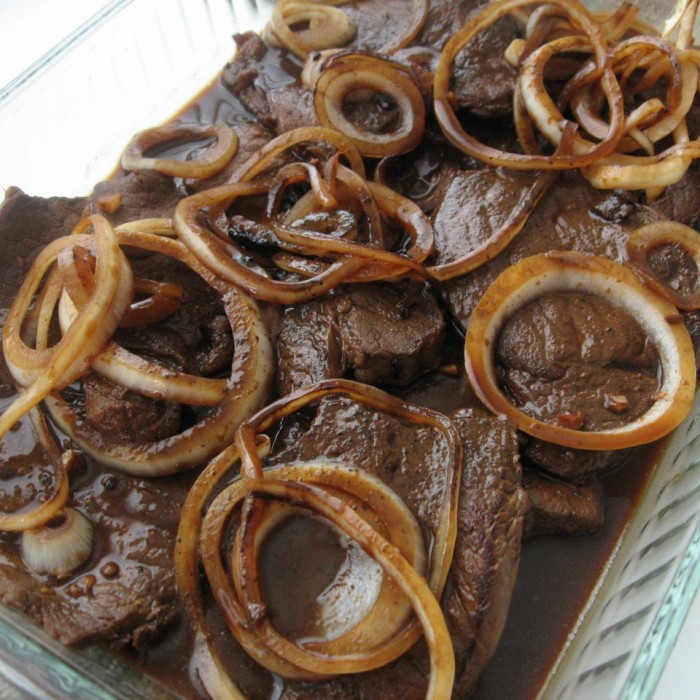
0. Marinate beef in soy sauce, lemon (or calamansi), and ground black pepper for at least 1 hour. Note: marinate overnight for best result 1. Heat the cooking oil in a pan then pan-fry half of the onions until the texture becomes soft. Set aside 2. Drain the marinade from the beef. Set it aside. Pan-fry the beef on the same pan where the onions were fried for 1 minute per side. Remove from the pan. Set aside 3. Add more oil if needed. Saute garlic and remaining raw onions until onion softens. 4. Pour the remaining marinade and water. Bring to a boil. 5. Add beef. Cover the pan and simmer until the meat is tender. Note: Add water as needed. 6. Season with ground black pepper and salt as needed. Top with pan-fried onions. 7. Transfer to a serving plate. Serve hot. Share and Enjoy!
Paella
Origin : Spanish
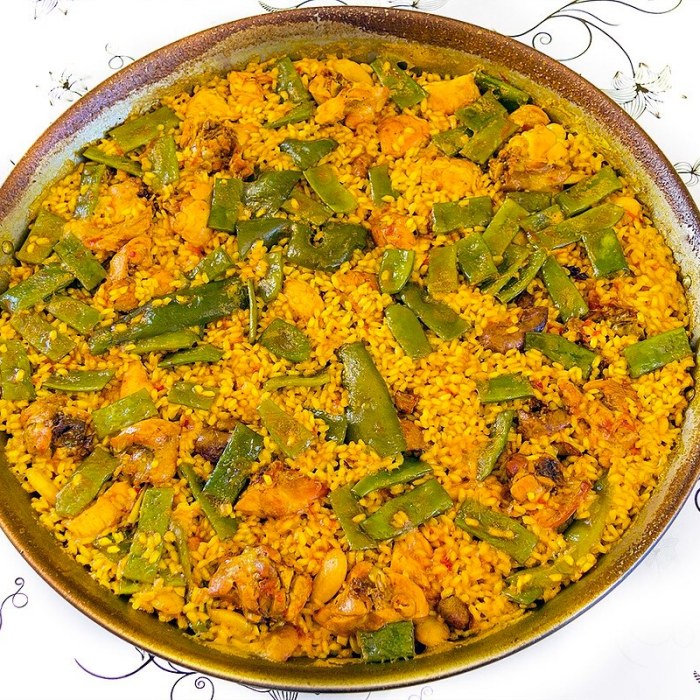
step 1 Heat 1 tbsp of the oil in a wide, shallow pan. Add the prawn heads and parsley stalks and sizzle until the heads turn pink, then mash with a potato masher. Pour over the sherry or wine and 300ml water, season with salt and simmer for 10 mins to make a stock, mashing the prawn heads as they cook. step 2 Scatter the mussels into the pan, cover the pan loosely with a lid or tea towel, then put over a high heat for 3-4 mins until the mussels just open. Stir to release the mussel juices, then pour the contents of the pan into a colander set over a large bowl containing the saffron. Let the saffron steep in the stock – you will need 700ml in total, so top up with water if needed and give everything a good stir. Pick the mussels out from the colander, then set aside. step 3 Wipe out the pan and add the rest of the olive oil. Sizzle the chorizo until it releases its oil, then add the onion and garlic and cook until softened. Add the squid and turn over until it turns white. Add the tomatoes and cook down for a minute, then pour over most of the stock, give everything a good stir and bring to the boil. Scatter the rice over the stock, stir well once, then boil vigorously for 5 mins. Reduce the heat to the lowest setting and slowly simmer for 10 mins without stirring until the rice has absorbed most of the liquid. step 4 Tuck the prawn tails into the rice and simmer for 5 mins, turning them over until cooked through. Stir through the mussels and broad beans or peas. Taste the rice – if it is still a little raw but the pan is dry, add a splash more stock and continue to cook; if it’s too soupy, then increase the heat to cook off the last of the stock. step 5 Once the rice is just cooked, turn off the heat and cover with a tea towel for a few minutes. Scatter over the parsley leaves and lemon zest, then season with smoked salt if you like. Stir everything once, then serve straight from the pan, with lemon wedges on the side.
Fainá
Origin : Argentinian
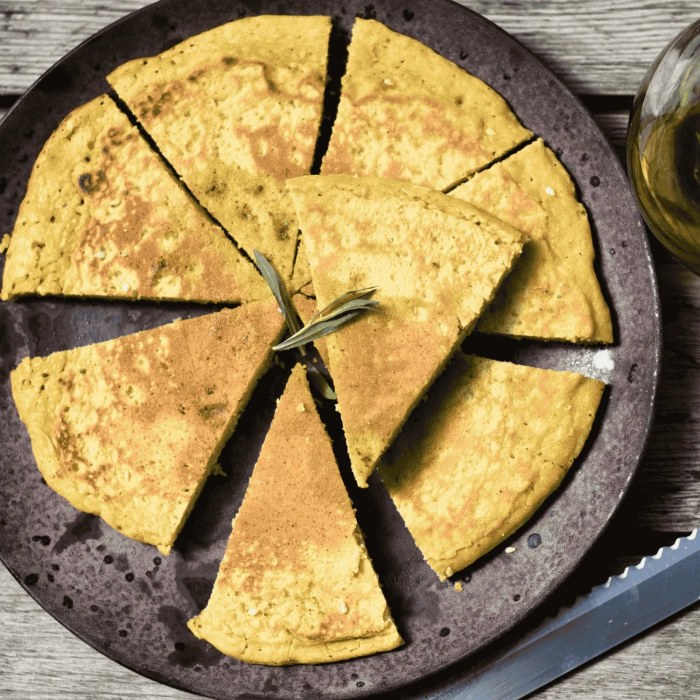
Prepare the Batter: Whisk together chickpea flour, water, salt, and pepper. Let sit for at least 4 hours. Bake: Preheat the oven to 220°C (430°F). Pour olive oil into a round baking dish and heat in the oven. Pour in the batter and bake for 25-30 minutes, until golden. Serve: Slice and serve hot, optionally with black pepper on top. Pro Tips: Let the batter rest for at least 2 hours, or overnight in the refrigerator, to ensure the chickpea flour fully hydrates and the flavors meld. For a crispy edge, preheat the baking pan with oil in the oven before adding the batter.
Challah
Origin : Polish

step 1 Combine the yeast, a pinch of the sugar and a couple tablespoons of lukewarm water in a small bowl. Stir to dissolve the yeast, then leave for 10 mins until foamy. step 2 Meanwhile, combine the flour, the remaining sugar and 2 tsp fine salt in a large bowl. Make a well in the centre, then add half the beaten egg, the yeast mixture and the oil. Pour in 200ml lukewarm water (it should feel slightly warm to the touch) and stir with a spoon, then mix using one hand, keeping the other clean while you bring the dough together. If there are a lot of very dry bits, gradually add a little water to just bring it together – you don't want it to get too wet and sticky. The dough should be moist, but not soggy. step 3 Once the dough has come together, turn it out onto a lightly floured surface. Knead using both hands for 10 mins until smooth and a bit springy. If it gets very sticky, add a very small amount of flour – as little as possible. A dough scraper is useful if the dough is sticking to the work surface. Stretch the sides of the dough down and pull together to form a ball. Lightly oil a bowl, then lightly roll the dough ball around the bowl so it's coated in the oil. Cover with a clean tea towel and leave in a warm place for 1 hr, or until dough has doubled in size. step 4 Line a baking sheet with baking parchment. Turn the dough out onto a clean work surface and divide into three equal pieces, weighing for accuracy, if you like. Roll each piece into a long sausage shape about 25cm long, tapering them slightly at both ends. Lay the pieces out in front of you, parallel to one another with a couple centimetres between each. Bring the sausages together at the top end, then plait them down the length, tucking in the ends when you reach the bottom. Carefully transfer the loaf to the prepared baking sheet and loosely cover with a clean tea towel. Leave to rise until puffy and billowy, about 40 mins. step 5 Meanwhile, heat the oven to 200C/180C fan/gas 6. Gently brush the rest of the beaten egg all over the challah, getting it into all the crevices, and sprinkle with the poppy or sesame seeds, if using. Bake on a middle shelf of the oven for 25-30 mins, until the loaf is golden brown underneath and sounds hollow when tapped. Check after about 15 mins – if the top of the loaf has started to get too dark, cover it with foil. Leave to cool on a wire rack, then serve.
Big Mac
Origin : American
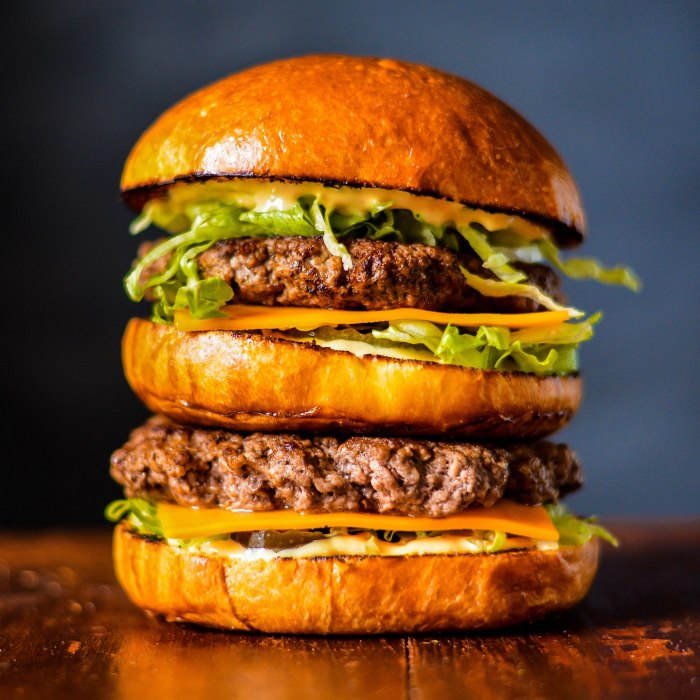
For the Big Mac sauce, combine all the ingredients in a bowl, season with salt and chill until ready to use. 2. To make the patties, season the mince with salt and pepper and form into 4 balls using about 1/3 cup mince each. Place each onto a square of baking paper and flatten to form into four x 15cm circles. Heat oil in a large frypan over high heat. In 2 batches, cook beef patties for 1-2 minutes each side until lightly charred and cooked through. Remove from heat and keep warm. Repeat with remaining two patties. 3. Carefully slice each burger bun into three acrossways, then lightly toast. 4. To assemble the burgers, spread a little Big Mac sauce over the bottom base. Top with some chopped onion, shredded lettuce, slice of cheese, beef patty and some pickle slices. Top with the middle bun layer, and spread with more Big Mac sauce, onion, lettuce, pickles, beef patty and then finish with more sauce. Top with burger lid to serve. 5. After waiting half an hour for your food to settle, go for a jog.
Falafel
Origin : Turkish
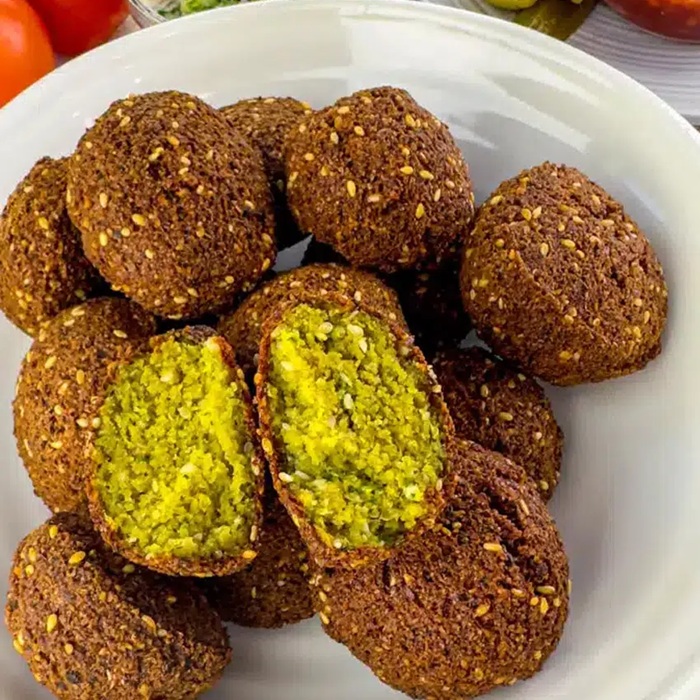
step 1 Heat 1 tbsp oil in a large pan, then fry the onion and garlic over a low heat for 5 mins until softened. Tip into a large mixing bowl with the chickpeas and spices, then mash together with a fork or potato masher until the chickpeas are totally broken down. Stir in the parsley or dried herbs, with seasoning to taste. Add the egg, then squish the mixture together with your hands. step 2 Mould the mix into 6 balls, then flatten into patties. Heat the remaining oil in the pan, then fry the falafels on a medium heat for 3 mins on each side, until golden brown and firm. Serve hot or cold with couscous, pitta bread or salad.
Lasagne
Origin : Italian
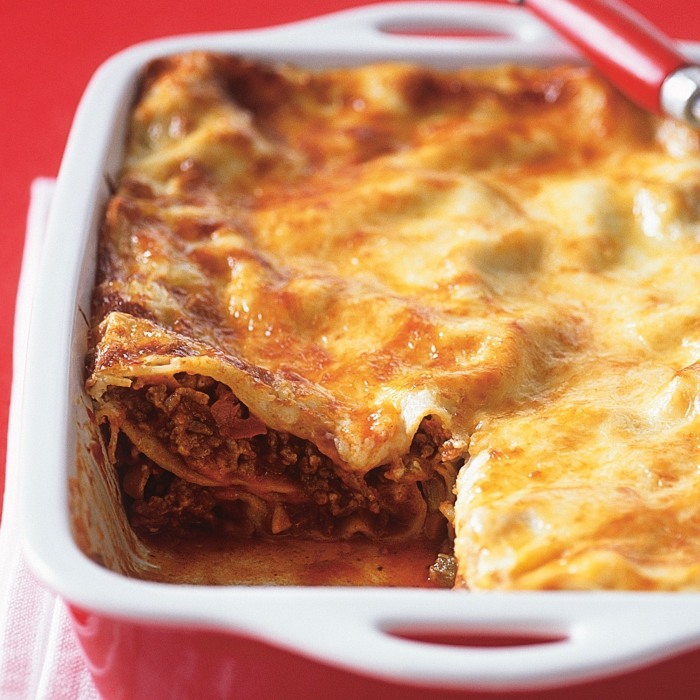
Heat the oil in a large saucepan. Use kitchen scissors to snip the bacon into small pieces, or use a sharp knife to chop it on a chopping board. Add the bacon to the pan and cook for just a few mins until starting to turn golden. Add the onion, celery and carrot, and cook over a medium heat for 5 mins, stirring occasionally, until softened. Add the garlic and cook for 1 min, then tip in the mince and cook, stirring and breaking it up with a wooden spoon, for about 6 mins until browned all over. Stir in the tomato purée and cook for 1 min, mixing in well with the beef and vegetables. Tip in the chopped tomatoes. Fill each can half full with water to rinse out any tomatoes left in the can, and add to the pan. Add the honey and season to taste. Simmer for 20 mins. Heat oven to 200C/180C fan/gas 6. To assemble the lasagne, ladle a little of the ragu sauce into the bottom of the roasting tin or casserole dish, spreading the sauce all over the base. Place 2 sheets of lasagne on top of the sauce overlapping to make it fit, then repeat with more sauce and another layer of pasta. Repeat with a further 2 layers of sauce and pasta, finishing with a layer of pasta. Put the crème fraîche in a bowl and mix with 2 tbsp water to loosen it and make a smooth pourable sauce. Pour this over the top of the pasta, then top with the mozzarella. Sprinkle Parmesan over the top and bake for 25–30 mins until golden and bubbling. Serve scattered with basil, if you like.
Dal fry
Origin : Indian
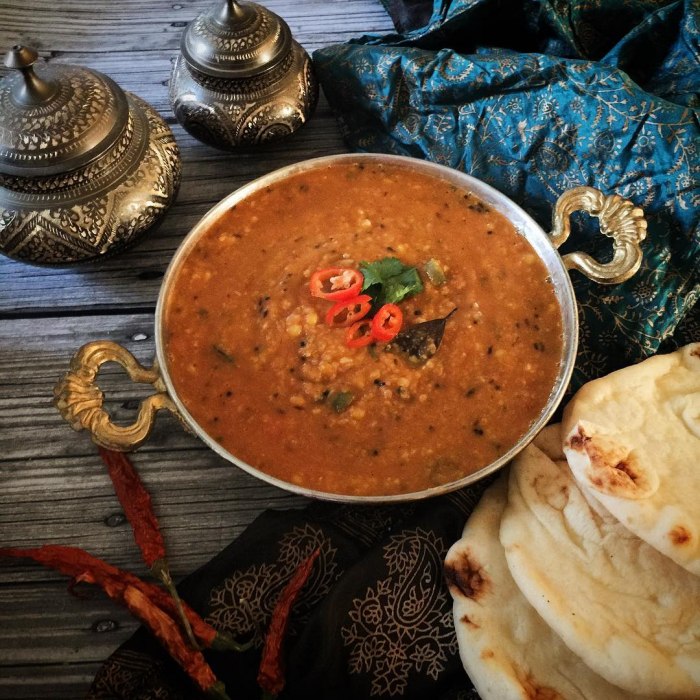
Wash and soak toor dal in approx. 3 cups of water, for at least one hours. Dal will be double in volume after soaking. Drain the water. Cook dal with 2-1/2 cups water and add salt, turmeric, on medium high heat, until soft in texture (approximately 30 mins) it should be like thick soup. In a frying pan, heat the ghee. Add cumin seeds, and mustard seeds. After the seeds crack, add bay leaves, green chili, ginger and chili powder. Stir for a few seconds. Add tomatoes, salt and sugar stir and cook until tomatoes are tender and mushy. Add cilantro and garam masala cook for about one minute. Pour the seasoning over dal mix it well and cook for another minute. Serve with Naan.
Koshari
Origin : Egyptian
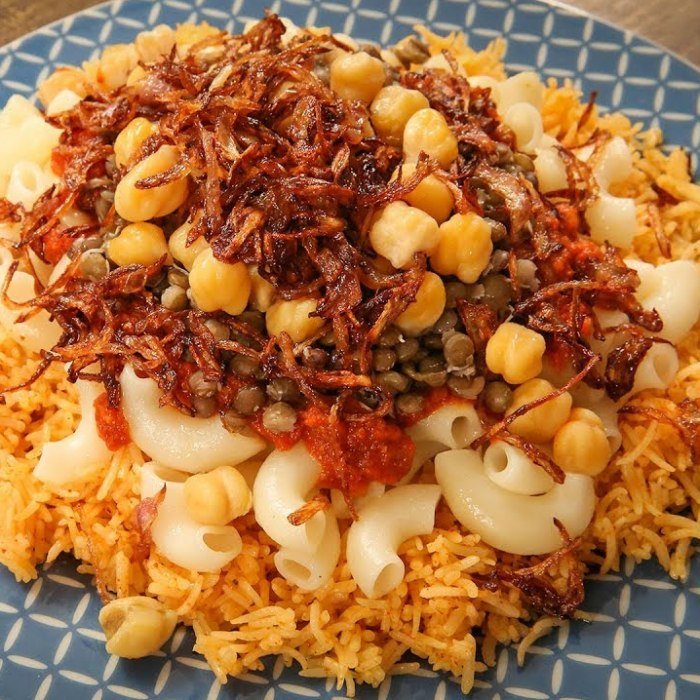
Cook the lentils. Bring lentils and 4 cups of water to a boil in a medium pot or saucepan over high heat. Reduce the heat to low and cook until lentils are just tender (15-17 minutes). Drain from water and season with a little salt. (Note: when the lentils are ready, they should not be fully cooked. They should be only par-cooked and still have a bite to them as they need to finish cooking with the rice). Now, for the rice. Drain the rice from its soaking water. Combine the par-cooked lentils and the rice in the saucepan over medium-high heat with 1 tbsp cooking oil, salt, pepper, and coriander. Cook for 3 minutes, stirring regularly. Add warm water to cover the rice and lentil mixture by about 1 1/2 inches (you’ll probably use about 3 cups of water here). Bring to a boil; the water should reduce a bit. Now cover and cook until all the liquid has been absorbed and both the rice and lentils are well cooked through (about 20 minutes). Keep covered and undisturbed for 5 minutes or so. Now make the pasta. While the rice and lentils are cooking, make the pasta according to package instructions by adding the elbow pasta to boiling water with a dash of salt and a little oil. Cook until the pasta is al dente. Drain. Cover the chickpeas and warm in the microwave briefly before serving. Make the crispy onion topping. Sprinkle the onion rings with salt, then toss them in the flour to coat. Shake off excess flour. In a large skillet, heat the cooking oil over medium-high heat, cook the onion rings, stirring often, until they turn a nice caramelized brown. Onions must be crispy, but not burned (15-20 minutes).